

 |
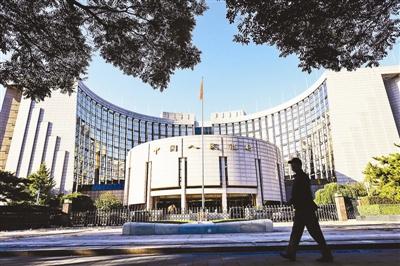
| The headquarters of the PBOC |
People's Bank of China (PBOC), China's central bank, said that stabilizing property prices at the sacrifice of the RMB exchange rate is undesirable, and vice versa. The PBOC believes that risks in both China’s exchange rate and property market have been exaggerated.
The central bank offered its explanation in the "China Monetary Policy Report of Quarter 3, 2016," issued on Nov. 8. The report was a response to public debate over the government's choice between depreciating the RMB against the USD, and managing the runaway housing market.
According to the report, monetary policy is restricted by international asset pricing and exchange rate in the open macro environment. With rapid economic development, China's residential wealth, especially housing assets, has been growing at a high speed. It is estimated that the financial assets of Chinese citizens have been expanding over 20 percent each year since the late 1970s, while the expansion of housing assets is twice the speed of residential financial growth. Internationally, the rapid growth of stock assets tends to have a great impact on the economy, which is closely related to real estate.
The report said that to stabilize the exchange rate at the expense of the property market is to tighten monetary policies to eliminate asset bubbles, and to raise the exchange rate through high interest. However, the PBOC believes that such passive deleveraging is a hard process that comes with high risks, and the stabilization of the exchange rate will also be difficult to achieve.
Meanwhile, easing the monetary policy and backing property prices will further contort the economic structure and accelerate debt accumulation, which will make a structural adjustment a much lengthier and costlier process.
"Both measures have exaggerated the risks in their respective fields, and are not desirable," the report concluded. The PBOC will maintain a prudent and moderate monetary environment, utilizing macroprudential policy to stabilize the financial system. More importantly, structural reforms must be carried out to boost market confidence and vitalize the economy, said the PBOC.
 Fire brigade in Shanghai holds group wedding
 Tourists enjoy ice sculptures in Datan Town, north China
 Sunset scenery of Dayan Pagoda in Xi'an
 Tourists have fun at scenic spot in Nanlong Town, NW China
 Harbin attracts tourists by making best use of ice in winter
 In pics: FIS Alpine Ski Women's World Cup Slalom
 Black-necked cranes rest at reservoir in Lhunzhub County, Lhasa
 China's FAST telescope will be available to foreign scientists in April
 "She power" plays indispensable role in poverty alleviation
 Top 10 world news events of People's Daily in 2020
 Top 10 China news events of People's Daily in 2020
 Top 10 media buzzwords of 2020
 Year-ender:10 major tourism stories of 2020
 No interference in Venezuelan issues
 Biz prepares for trade spat
 Broadcasting Continent
 Australia wins Chinese CEOs as US loses